

Have you ever been saree shopping and realised you know the colour that you want, the fabric you like, and even the blouse style you want, but you have no idea which fabric to choose? Well, you are not alone.
The fabric can completely change how your saree looks and feels. A cotton saree can be light and comfortable for a hot day, while silk has a richer feel that works beautifully for weddings. Georgette falls softly around your body.
Organza has a more structured look, and chiffon gives you a light, flowing drape. So when you are looking for different types of saree fabrics, you need to understand what each one is actually like to wear.
Different types of Saree fabrics at a glance
| Saree Fabric | Feel | Drape | Commonly Suited For |
|---|---|---|---|
| Cotton | Soft and breathable | Moderate | Everyday wear |
| Silk | Rich and smooth | Structured | Weddings and festivals |
| Georgette | Light and slightly textured | Flowing | Parties and dinners |
| Chiffon | Very light | Soft and flowy | Evening wear |
| Organza | Crisp and lightweight | Structured | Parties and celebrations |
| Linen | Natural and textured | Relaxed | Office and summer |
| Crepe | Smooth with slight texture | Neat | Semi-formal occasions |
| Satin | Smooth and shiny | Flowing | Parties |
| Velvet | Soft and heavy | Structured | Winter events |
| Net | Light and sheer | Flowing | Partywear |
| Tussar Silk | Textured and natural | Moderate | Festivals |
| Viscose | Soft and smooth | Flowing | Everyday and casual wear |
| Tissue Silk | Light and lustrous | Soft and slightly structured | Festivals and weddings |
| Lycra/Spandex | Stretchy and flexible | Fitted and fluid | Partywear and modern styles |
| Art Silk | Smooth and silk-like | Flowing to moderate | Festive and casual occasions |
Cotton
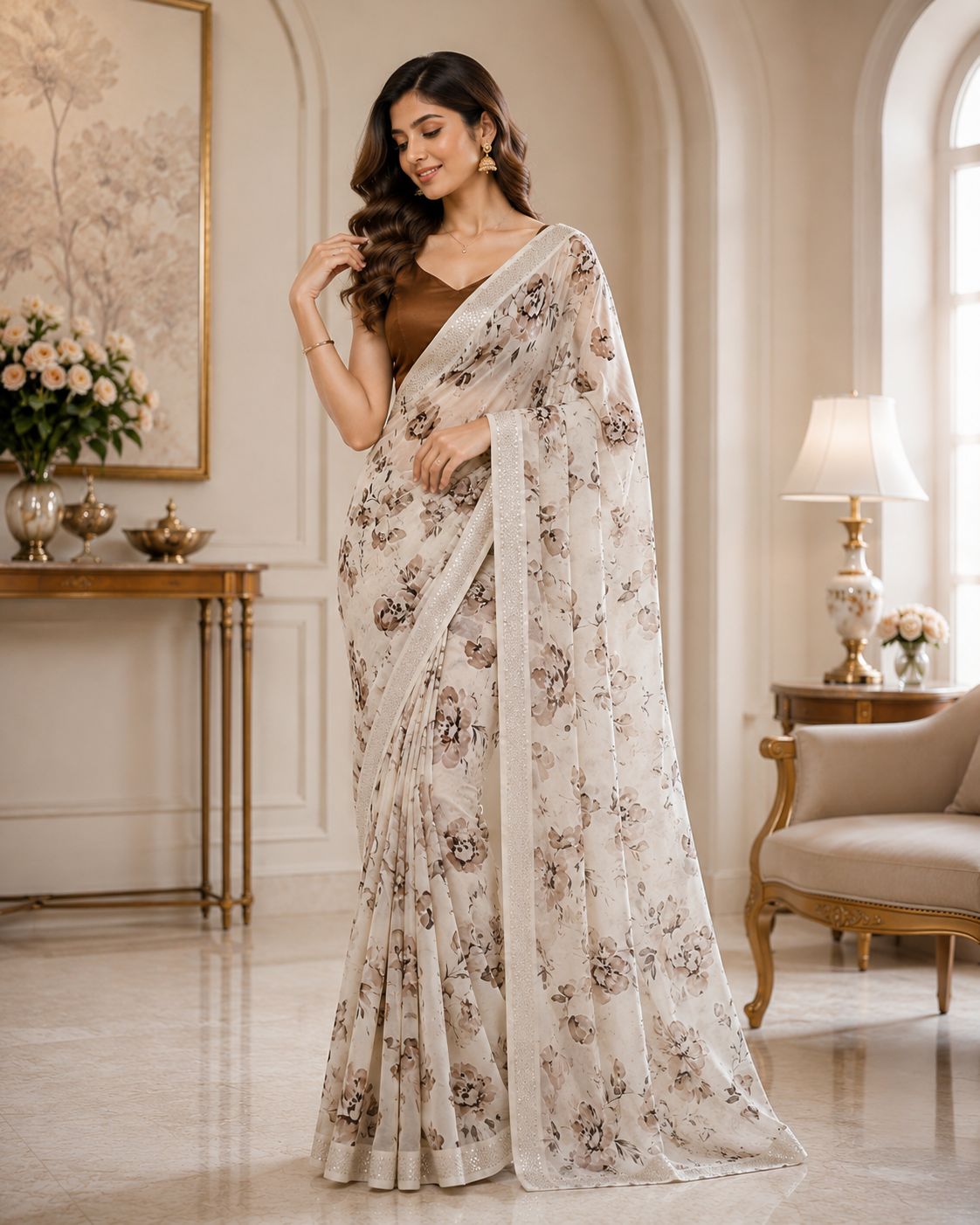
Cotton saree is one of the most practical choices when comfort is your priority. It is made from natural cotton fibre and is especially suited for warm weather. A cotton saree generally feels breathable and comfortable, making it suitable for everyday wear as well as some formal occasions.
Silk
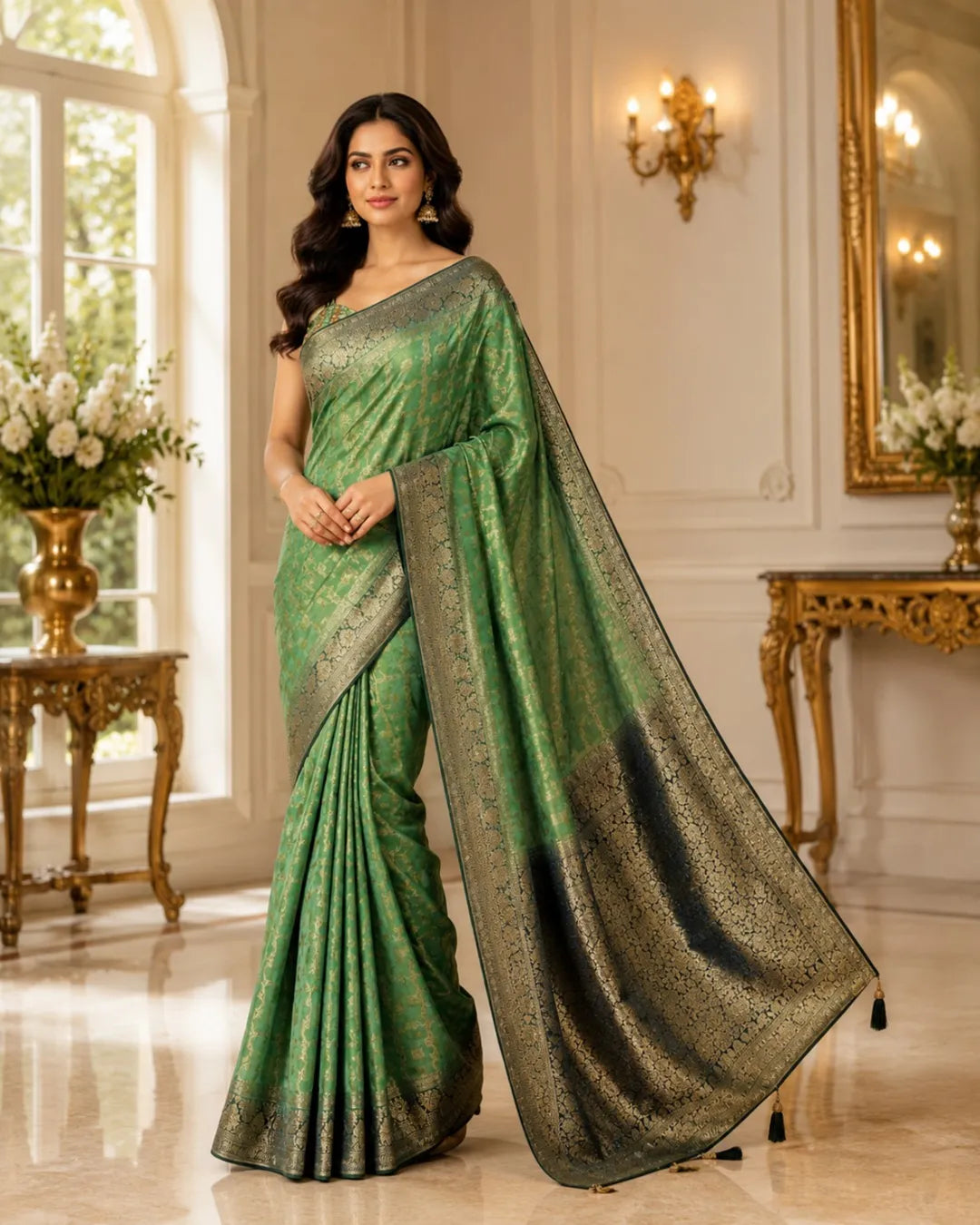
Silk is one of the best-known Indian saree fabrics and has a special place in traditional Indian clothing. Silk has a naturally rich texture and a beautiful sheen. Depending on the type of silk, it can range from lightweight and soft to more structured and substantial. Silk sarees are often associated with weddings, festivals and important family occasions because they have a naturally dressy appearance.
Georgette
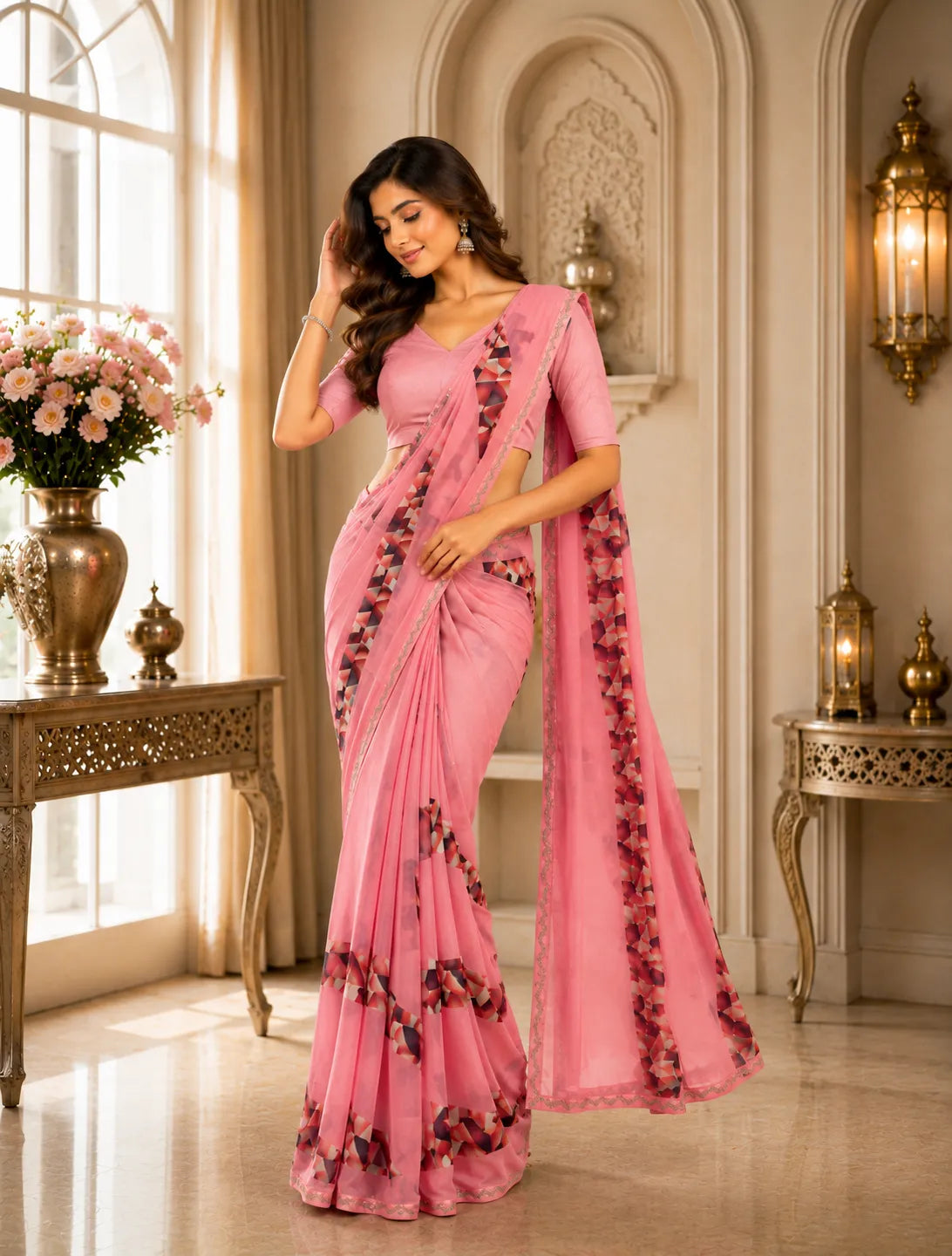
Georgette is a lightweight fabric with a soft, slightly textured surface. It has a fluid drape and generally falls close to the body which makes it a popular choice when you want a saree that feels elegant without being too heavy. It works well for parties and evening events.
Chiffon
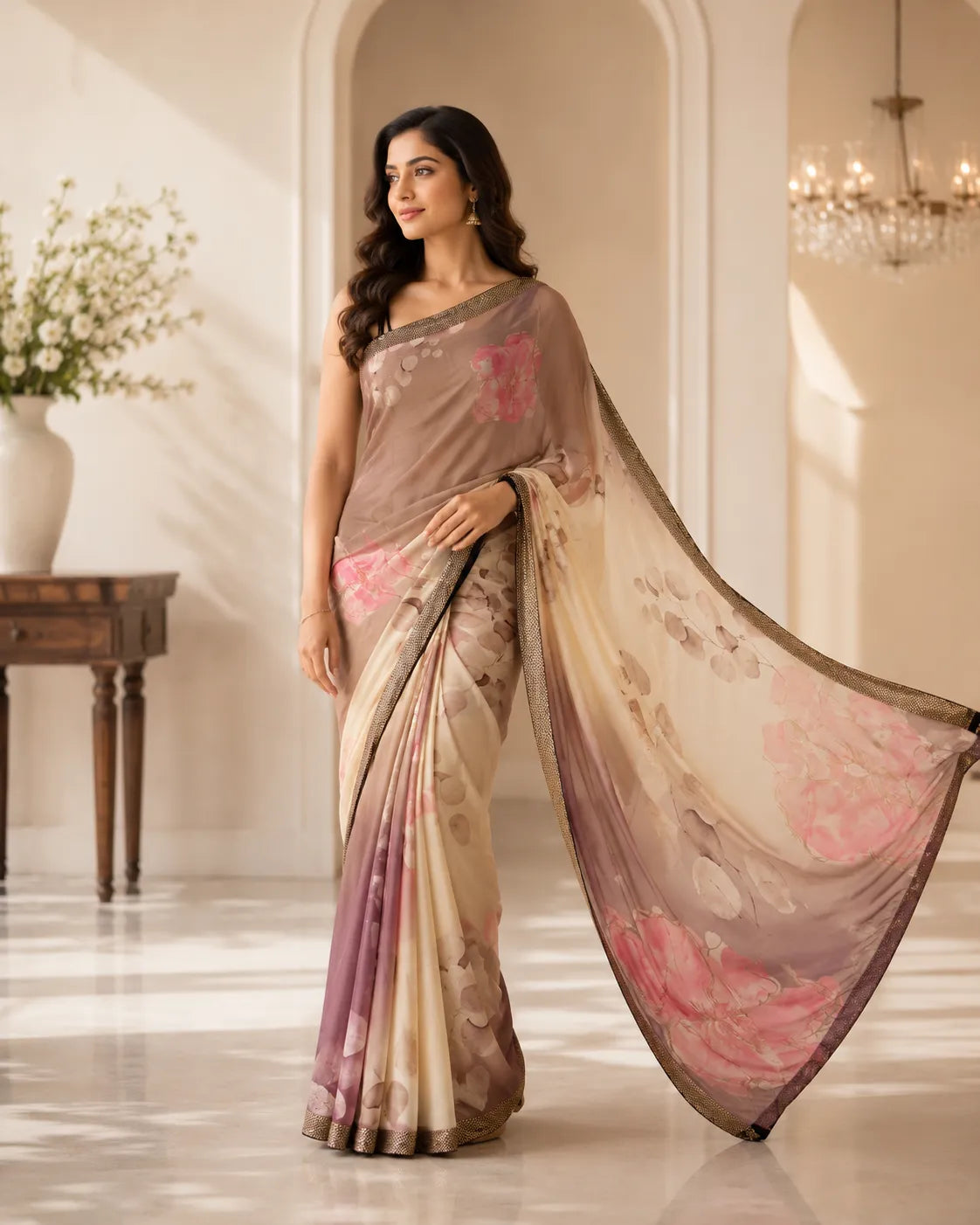
Chiffon is known for being extremely lightweight and flowy. It has a soft drape and creates a graceful silhouette when you wear it. Because the fabric is lightweight and delicate, chiffon can be comfortable for longer events, but it may require careful handling and draping to avoid snags or damage.
Organza
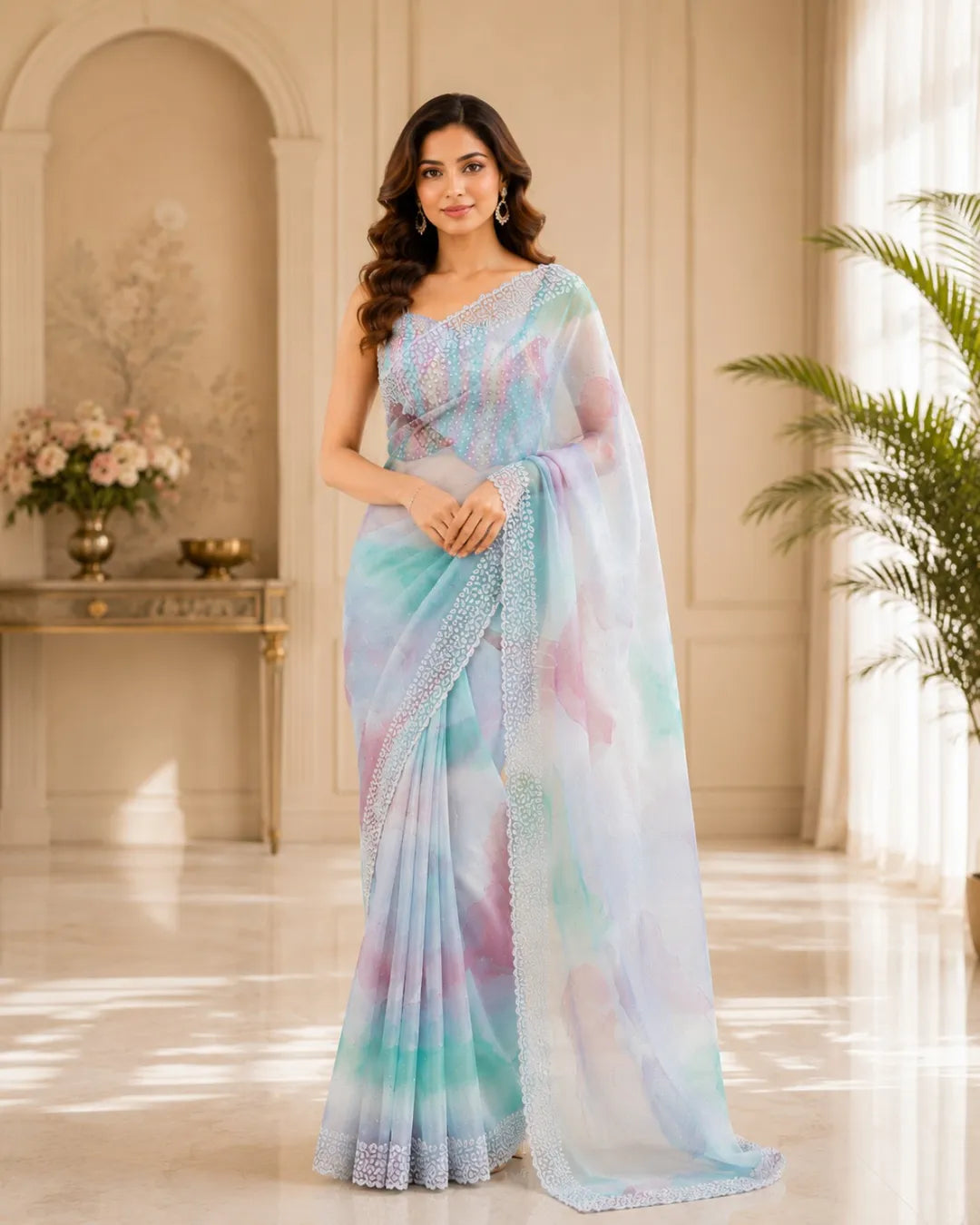
Organza has a completely different personality from chiffon and Georgette. It is lightweight but has a crisp slightly structured feel. Instead of falling closely around your body, the organza is likely to hold its shape. This makes it a good option when you want a saree with a polished and slightly dramatic look.
Linen
Linen sarees are popular with those who prefer comfortable, breathable fabrics. Made from flax fibres, linen has a natural texture and a relaxed appearance, although it can crease more easily than some other saree fabrics.
Crepe
Crepe has a slightly textured surface and a smooth, fluid fall. The term covers several types of fabric, and depending on its fibre and construction, crepe sarees can range from lightweight and flowing to heavier and more structured.
Satin
Satin is known for its smooth surface and glossy sheen, which comes from its characteristic weave. It can be made from silk or synthetic fibres, depending on the fabric.
It has a more glamorous look as compared to fabrics like cotton or linen making it suitable when you want your saree to feel dressier. Depending on its fibre and construction, satin can range from lightweight to heavier fabrics, and its glossy appearance makes it particularly popular for evening events and parties.
Velvet
Velvet is a soft, plush fabric that generally has a heavier and more substantial feel than lightweight saree fabrics. They are not usually the first choice for everyday wear but they can look striking during winter weddings and formal evening events. Velvet is also sometimes used for blouse panels or borders.
Net
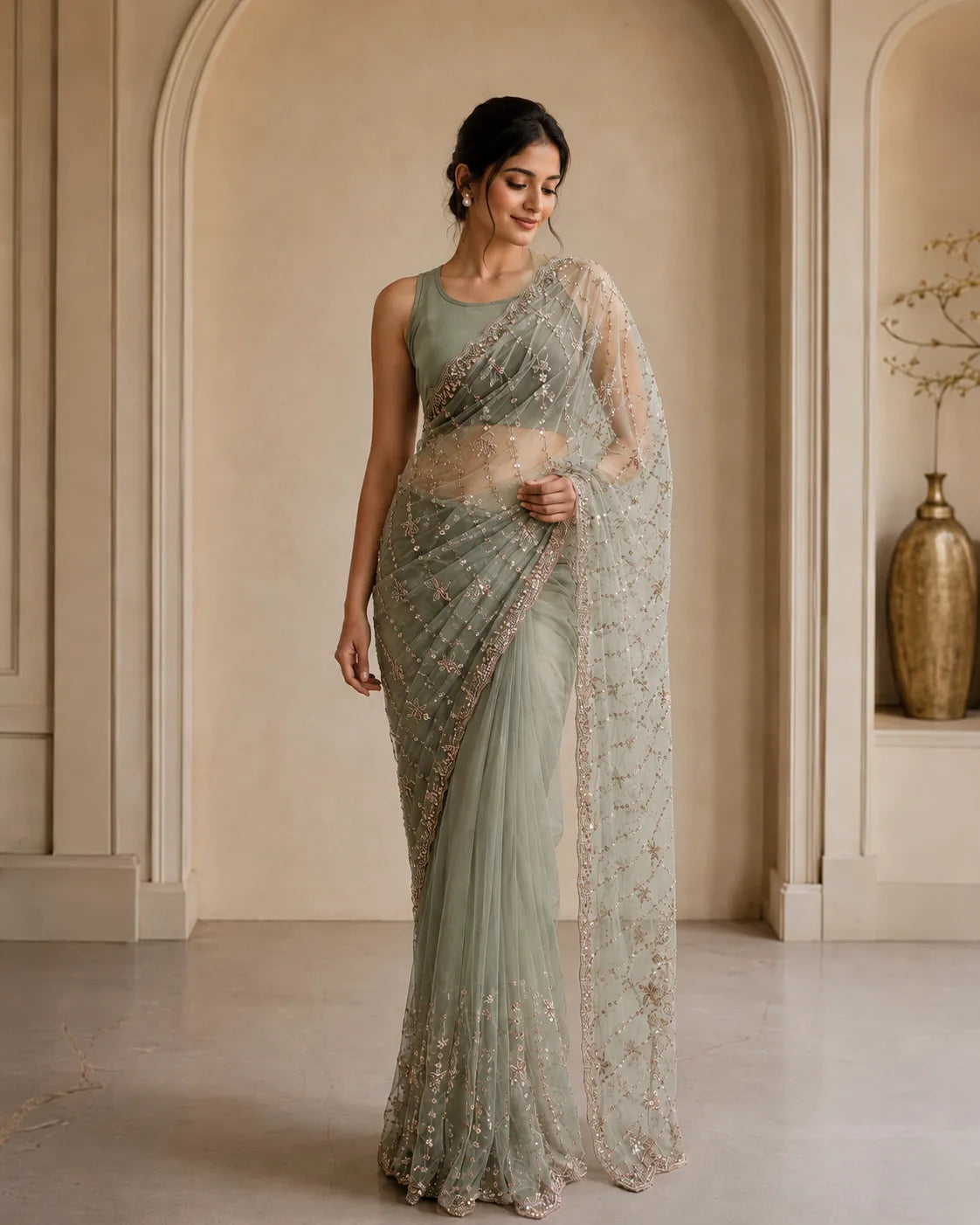
Net sarees are lightweight and often used for partywear designs. The fabric can be decorated with embroidery, beads or other embellishments. As the material itself is relatively sheer, it is generally worn with suitable blouses and lining. A net saree can create a glamorous look without the heaviness of a heavily embellished or densely woven saree. It is particularly popular for weddings, receptions and other occasions where a more glamorous look is desired.
Tussar silk
Tussar silk has a more natural, textured appearance compared with many smoother silk varieties. Tussar silk is a type of silk known for its naturally textured surface, earthy appearance and subtle sheen. It can be a good option if you love silk but prefer something that looks less glossy. These sarees are dressed up with jewellery or kept simple.
Viscose
If you are looking for a soft and comfortable fabric but not as heavy as some traditional fabrics, then viscose sarees are a good choice. Viscose is made of regenerated cellulose fibres and can be very smooth and soft to the touch. It can be woven and finished in many ways to achieve different drapes and looks. Viscose sarees are popular for their easy maintenance, making them suitable for daily wear, casual outings, and occasions where you want a soft, easy-flowing saree.
Tissue Silk
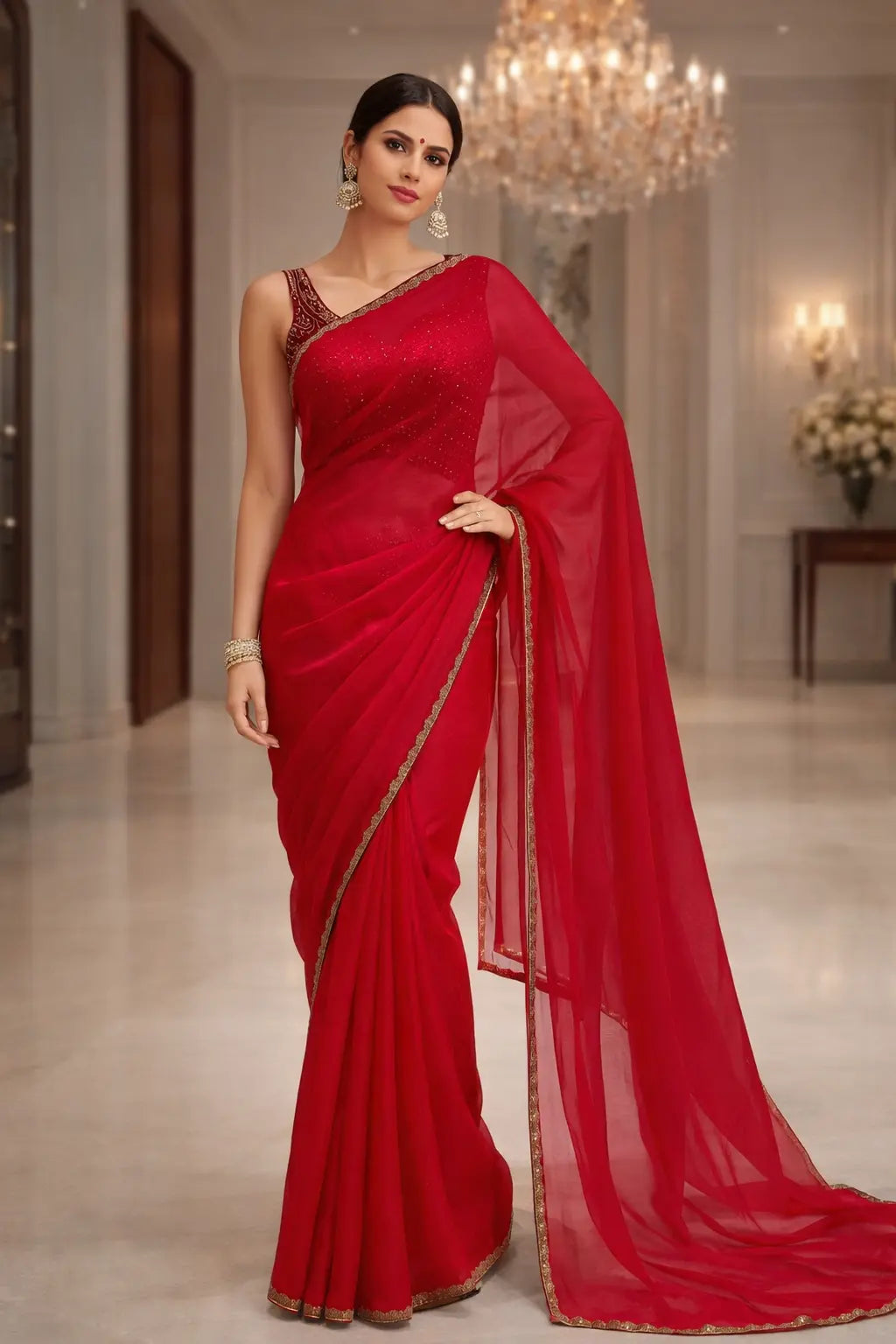
Tissue silk is a delicate, lightweight fabric known for its lustrous or slightly sheer appearance. It is different from the heavier silk saree and is known for its shiny finish and lightweight feel. Some tissue silk sarees combine fine silk yarns with metallic yarns to create an additional lustrous effect. They work particularly well if you want your saree to look dressy without being too heavy. Tissue silk is frequently used for parties, weddings and evening occasions.
Elastane
Elastane, also known as spandex, is a highly stretchable fibre that is sometimes blended with other fibres to add stretch and flexibility to a fabric. In sarees, stretch fibres may be used when a closer fit or greater ease of movement is desired, particularly in some pre-stitched or contemporary styles.
Art Silk
Art silk is a synthetic material which mimics the appearance of natural silk. Depending on the type of saree, it can be made from materials such as rayon or polyester.
Art silk sarees are often more affordable than sarees made from pure silk, while offering a similar visual appeal. Their weight, drape and feel can vary depending on the fibre and construction used.
They are a good choice if you like the look of silk but want something easier to wear for casual celebrations, festive gatherings or everyday occasions.
Fibre vs Fabric: What Is the Difference?
Understanding the meanings behind some saree fabric terms before deciding on which saree to purchase is important. Cotton, silk, linen and viscose refer primarily to fibres or fibre-based materials, while chiffon, georgette, organza, crepe and satin describe particular fabric constructions or characteristics.
Some of the terms for sarees also denote traditional weaving or regional traditions, like Banarasi, Kanjeevaram, Chanderi and Kota Doria.
Knowing this difference makes it easier to understand why two sarees made from different fibres can still have a similar look or drape.
How to Choose the Right Saree Fabric
The right saree fabric depends on the weather, occasion, comfort, desired drape and how much care you are willing to give the saree.
For hot and humid weather: Cotton and linen are popular choices because they are breathable and comfortable.
For everyday wear: Cotton and viscose can work well when you want comfort and easy styling.
For office wear: Cotton, linen and some lightweight crepes or georgettes can offer a polished look without feeling too heavy.
For weddings and festive occasions: Silk, tissue silk and organza are popular when you want a more dressy appearance.
For parties and evening events: Chiffon, georgette and satin are often chosen for their flowing or glossy appearance.
For a more structured look: Organza and some tissue fabrics can hold their shape better than fluid fabrics.
For a soft, flowing drape: Chiffon, georgette and some viscose fabrics are good options.
Conclusion
Understanding the different types of saree fabrics can make saree shopping much easier. Instead of choosing a saree only because you like its colour or border, you can think about the fabric and drape too. There is no single best fabric for saree shopping. The right choice is the one that suits the occasion, comfort level, and the way you like your saree to fall. And once you understand the different saree fabric names, you can shop with a lot more confidence.